

7-Day Ladakh Itinerary for September: Leh, Nubra Valley & Pangong Lake
One full week is enough to get a good first look at Ladakh, as long as you don’t try to cover half the region in seven days. This Ladakh itinerary 7 days plan keeps things simple: two days around Leh, followed by Nubra Valley and Pangong Lake, before returning back to Leh.
September works well for this route. The main tourist season is still running, but the weather is cooler and the landscape starts taking on an autumn feel. The one thing you should not rush is acclimatisation. If you fly into Leh, the current administration guidelines require at least 48 hours before you travel to higher-altitude places such as Khardung La and Pangong Lake.
Is 7 Days Enough for a Ladakh Trip?
Yes, if your idea of a Ladakh trip is to see the main highlights rather than cover every destination. For seven days, we would stick to Leh, Nubra Valley and Pangong Lake. Adding Tso Moriri, Hanle or Zanskar would mean spending more time on the road.
This route also gives you some breathing space. You get two nights in Leh before heading towards the higher areas, an overnight stay in Nubra and another at Pangong. So if you’re looking for a 7 days Ladakh trip for your first visit, this is a route that makes sense without turning every day into a race.
7-Day Ladakh Itinerary for September
Day 1 – Arrive in Leh and Acclimatize
- Your first day should be slow.
- After reaching Leh, check into your hotel and rest. The altitude can take some getting used to, particularly if you have flown in from a much lower city.
- You don’t need a sightseeing list for today. Have your meals, drink water and take it easy.
- If you’re feeling fine later in the day, you can take a short walk around the market near your hotel.
- Don’t rush into a drive to Khardung La or another high-altitude destination yet.
Overnight: Leh
Day 2 – Leh Local Sightseeing
- You can spend your second day exploring Leh and nearby places.
- Visit Shanti Stupa, Leh Palace and Leh Market. You can also visit nearby monasteries such as Thiksey if you’re feeling comfortable.
- Keep the pace relaxed. This day is still part of your acclimatisation period, so there is no need to turn it into a full-day sightseeing marathon.
- It is also a good time to get everything ready for the next few days. If you’re travelling by bike, check the motorcycle. If you’re taking a cab, confirm the next day’s departure time. Pick up any snacks, medicines or other things you may need.
Overnight: Leh
Day 3 – Leh to Nubra Valley via Khardung La
- Now the road journey begins.
- Leave Leh in the morning and head towards Nubra Valley via Khardung La. The pass is one of the best-known sections of the Leh to Nubra Valley route.
- Take your time at the pass and don’t stay longer than necessary. Once you start descending, the scenery changes quickly as you enter Nubra.
- Depending on your arrival time, you can visit Diskit Monastery and Hunder. The sand dunes at Hunder are one of the unusual sights of Ladakh, with the surrounding mountains creating a landscape that looks completely different from Leh.
- If you’re lucky, you may also see the famous double-humped Bactrian camels around Hunder.
Overnight: Nubra Valley
Day 4 – Nubra Valley to Pangong Lake
- This is probably the day you’ll remember most from the trip.
- After breakfast, leave Nubra and make your way towards Pangong Lake. The Nubra Valley to Pangong Lake route passes through some spectacular mountain scenery.
- The exact road conditions need to be checked before you leave. Mountain routes can be affected by weather, and your driver would confirm that the route is suitable on that particular day.
- Once you reach Pangong, don’t try to squeeze in too much. Walk along the lake, find a quiet spot and enjoy the changing colours of the water.
- Pangong sits at around 4,350 metres, so the cold can be quite sharp after sunset.
Overnight: Pangong Lake
Day 5 – Pangong Lake to Leh via Chang La
- Get up early if you want to see Pangong in the morning light. The lake can look very different once the sun comes up.
- After breakfast, start your journey back to Leh via Chang La.
- This can be a long road day, so leave early and don’t make too many unnecessary stops. Once you reach Leh, keep your evening free.
- A hot meal, a shower and an early night may be all you want after the last two days.
Overnight: Leh
Day 6 – Sham Valley or Leh Local Tour
- Keep Day 6 flexible.
- If you didn’t get enough time around Leh earlier, you can explore more of the town. Otherwise, take a day trip towards the Sham Valley.
- Depending on the route you choose, you can visit places such as Likir, Alchi or Lamayuru. These places give you a different view of Ladakh, away from the high-altitude lakes and mountain passes.
- If you’re tired after Nubra and Pangong, don’t feel that you have to fill every hour. This day can also be kept easy.
Overnight: Leh
Day 7 – Departure from Leh
- Have breakfast and head to Leh airport for your flight home.
- If you have a late flight, you can spend a little time around the market before leaving. Keep the morning free rather than planning another long sightseeing drive.
- And that’s your 7 day Ladakh itinerary — Leh, Nubra Valley and Pangong, keeping it comfortable and enjoyable without trying to fit the entire region into one week.
Ladakh Weather in September
September is a good month for travelling around Ladakh, but you will notice the cold more as the trip progresses. Leh can be pleasant during sunny afternoons. Mornings and evenings are cooler, while Pangong and the high passes feel much colder. Ladakh Tourism describes September and October as the autumn season, with clear skies and golden landscapes.
Temperature in Leh, Nubra Valley and Pangong Lake
| Place | What September feels like |
| Leh | Pleasant in sunshine, cool mornings and evenings |
| Nubra Valley | Comfortable during the day, colder after sunset |
| Pangong Lake | Cold, especially overnight |
| Khardung La | Very cold and windy |
| Chang La | Very cold and exposed |
Don’t pack only for the daytime temperature in Leh. The higher you travel, the more useful your warm layers become.
Early September vs Late September Weather
Early September can still feel fairly busy because the main tourist season hasn’t ended.
By the latter part of the month, the weather starts getting colder, especially at night. If you are travelling towards the end of September, pay closer attention to your accommodation at Pangong and the conditions on the high passes. For this particular itinerary, early to mid-September gives you a little more flexibility.
Road Conditions for Leh, Nubra Valley and Pangong Lake
The roads on this itinerary are regularly used during the September travel season, but mountain roads don’t come with guaranteed conditions.
Leh to Nubra Valley Road Conditions
The Leh–Nubra road crosses Khardung La before descending into the valley.
September is within the main travel season for this route. Still, weather at the pass can be very different from what you see in Leh. If you’re riding, start early and avoid trying to cross the pass late in the day.
Nubra Valley to Pangong Lake Road Conditions
The Nubra Valley to Pangong Lake stretch is one of the most scenic parts of the route, but it is also one where you should leave some flexibility.
It is important to check the road situation before leaving Nubra. If the direct route isn’t suitable on your travel date, your driver can suggest another arrangement.
Pangong Lake to Leh Road Conditions
The return journey normally goes through Chang La. Start from Pangong early enough to give yourself plenty of daylight. Weather conditions at the pass can change quickly, so don’t plan the day around reaching Leh at an exact time.
Permits Required for Nubra Valley and Pangong Lake
Permit and vehicle requirements in Ladakh can change, so the latest rules need to be considered before your trip. The official District Leh website provides online services and information related to permits and vehicle movement.
For your Leh Nubra Pangong itinerary as a package, the required permits and related formalities may already be included.
Documents Required for Ladakh Permits
Keep these with you:
- Government-issued photo ID
- Driving licence, if you are riding
- Vehicle documents, only if using your own bike or car
- Passport and visa documents where applicable
- Copies of important travel documents
Carry digital copies as well as a few physical copies.
What to Pack for a 7-Day Ladakh Trip in September
For a week in Ladakh, pack layers rather than one extremely heavy jacket.
Clothes to Pack for Ladakh in September
- T-shirts
- Thermal innerwear
- Fleece or sweater
- Warm jacket
- Windproof layer
- Comfortable trousers
- Warm socks
- Gloves
- Woollen cap
- Comfortable walking shoes
For a Ladakh bike trip in September, include proper riding gloves, a riding jacket, protective trousers or knee guards and suitable riding shoes.
Other Travel Essentials
- Sunglasses
- Sunscreen
- Lip balm
- Personal medicines
- Water bottle
- Power bank
- Small backpack
- Toiletries
- Copies of important documents
A small torch can also come in handy when staying in remote areas.
Estimated Cost of a 7-Day Ladakh Trip
For a 7-day trip from Delhi, you can keep a budget of around ₹40,000–₹60,000 per person if you’re flying to Leh. This covers the main expenses like flights, hotels, food and local transport. If you opt to rent a bike, you’ll need to keep some extra money aside.
| Expense | Approximate 2026 cost |
| Return Delhi–Leh flight | ₹10,000–₹25,000+ |
| Leh hotel | ₹2,000–₹4,500/night |
| Nubra/Pangong stay | ₹2,500–₹4,500/night |
| Food | ₹700–₹1,200/person/day |
| Bike rental | ₹1,500–₹3,500/day |
| Local/shared transport | Varies by route |
| Private vehicle | Higher than shared transport |
These figures can move around with your travel dates and choice of accommodation.
Accommodation Cost
Leh has the largest range of hotels, guesthouses and homestays.
Nubra also has several options, but Pangong has fewer choices and colder nights. Before booking a stay at Pangong, ask about the room heater availability and what is included in the room rate.
Transport Cost
Your choice of transport makes a noticeable difference to the budget.
A solo traveller can look at shared transport to keep the cost down. A couple or small family may find a private vehicle more convenient.
If you’re riding, current 2026 rental listings show motorcycles ranging from around ₹1,500 a day for some older Royal Enfield models to ₹3,000–₹3,500 for newer Himalayan models.
Food, Permits and Other Expenses
Food doesn’t have to be expensive in Leh. Local restaurants and smaller cafés offer plenty of simple options.
Keep some extra money aside for snacks, shopping, entry fees and anything unexpected during the trip. Permit and environmental charges should be checked for the current season rather than referring to past information.
Important Travel Tips for Ladakh in September
- Give yourself two days in Leh. This isn’t a day you should sacrifice just to add another destination. The current acclimatisation requirement applies before travelling to higher-altitude areas.
- Leave early for long drives. It gives you more daylight and makes the day less stressful.
- Don’t compare Leh weather with Pangong weather. They can feel completely different on the same day.
- Keep some flexibility in the itinerary. Mountain roads don’t always run according to the schedule on paper.
- Carry enough cash. Payment options become less dependable once you leave Leh.
- If you’re riding, check your motorcycle before the trip. Tyres, brakes, chain, clutch, lights and basic spares should all be looked at.
- Don’t rush through the high passes. You are there to experience the route, not to see how quickly you can cross it.
FAQs About a 7-Day Ladakh Itinerary in September
Is 7 days enough for a Ladakh trip?
Yes. Seven days is enough for a first trip covering Leh, Nubra Valley and Pangong Lake. Though it isn’t enough to comfortably add every major destination in Ladakh.
What is the best 7 day Ladakh itinerary?
For a first trip, a good route is Leh → Leh → Nubra → Pangong → Leh → Sham Valley/Leh → departure. Keeping the first two days around Leh also gives you time to acclimatise.
Can I go to Pangong on the second day?
Not if you have just flown into Leh. The current Leh administration requires tourists arriving in Leh to complete at least 48 hours of acclimatisation before travelling to higher-altitude places such as Pangong Lake.
Is September a good time for this itinerary?
Yes. September is still part of the main Ladakh travel season, and the weather is generally suitable for the Leh–Nubra–Pangong route. Nights are cold, especially at Pangong.
How cold is Pangong Lake in September?
Pangong is much colder than Leh once the sun goes down. If you’re staying overnight, take proper warm layers and check on the heating arrangement available in your booked room.
Is the Leh to Nubra Valley road open in September?
The route is normally used during the September season. Conditions at Khardung La can change with the weather, so check the road situation before leaving Leh.
Is the Nubra Valley to Pangong Lake route open in September?
It can be used when road conditions are suitable. Because this is a mountain route, confirm the situation on your travel date rather than assuming it will always be open.
How much does a 7-day Ladakh trip cost?
A flight-based mid-range trip from Delhi can work out to roughly ₹40,000–₹60,000 per person. Your final amount will change with flights, hotels, transport and the type of trip you choose.
Can I do this 7 day Ladakh itinerary on a bike?
Yes. Leh, Nubra and Pangong are popular with riders in September. Make sure you are comfortable with high-altitude riding and give yourself enough time for each road section.
Should I choose a private cab or shared transport?
Shared transport can work well for solo travellers. If you’re travelling as a couple, family or small group, a private vehicle gives you more freedom with stops and timings.
Trending Blogs


Similar Blogs
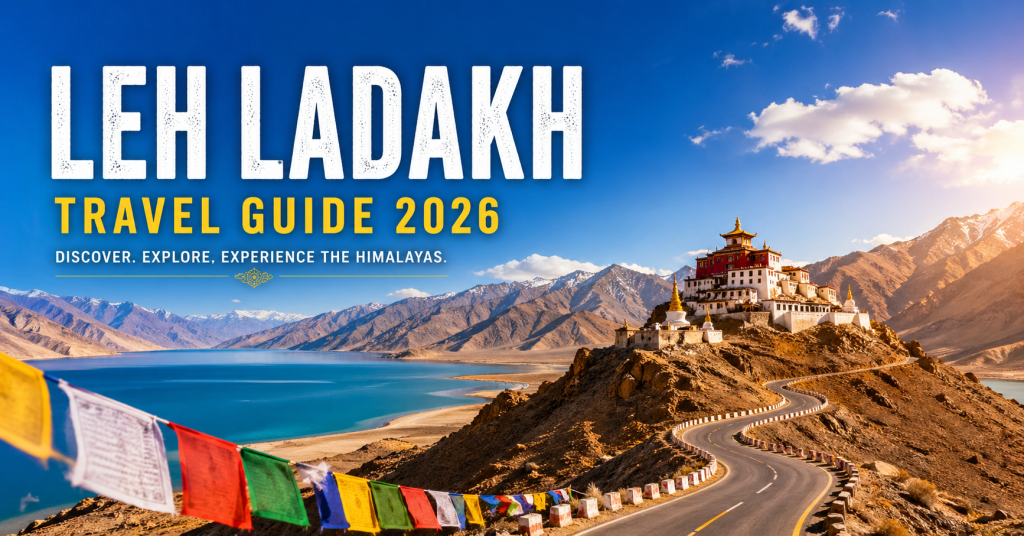
10 Reasons September Is One of the Best Months to Visit Ladakh
If you have been waiting for the right time to visit Ladakh, September deserves a place on your list. Ladakh in September has a slightly different feel from the busy summer months. The skies are clearer, the evenings start getting cold, the roads feel more peaceful and the landscape slowly begins to change with the season.
Where You Stay in Leh Ladakh
The single most confusing part of planning a Ladakh trip, after sorting out permits and altitude medicine, is figuring out where to actually stay. Leh is not a large city, but it has distinct neighbourhoods that feel completely different from each other. Stay in the wrong area for your travel style and you will spend your acclimatisation days walking uphill in thin air when you should be resting. Stay in the right one and your base will quietly make everything easier.
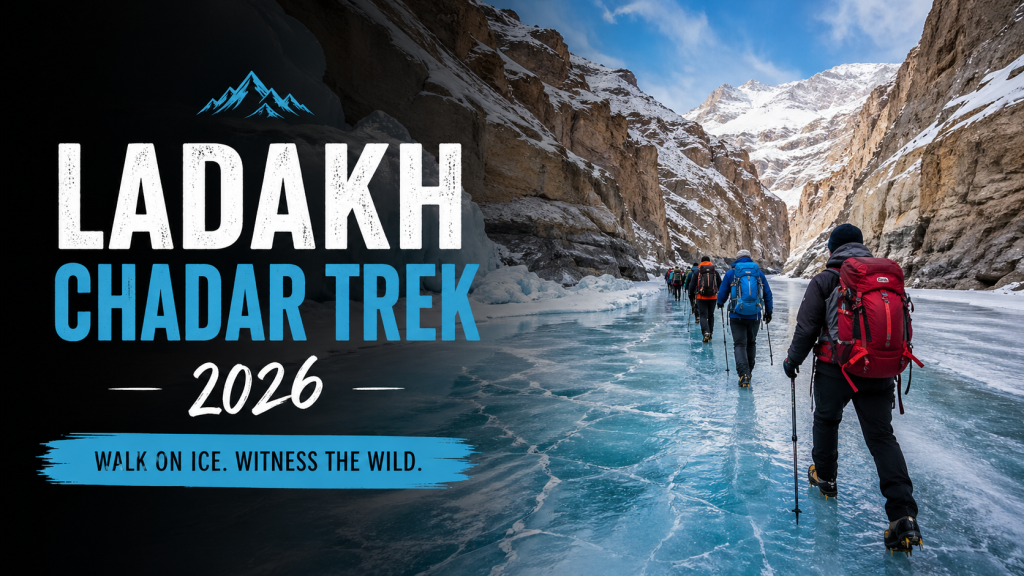
Trekking in Ladakh: Top 13 Treks, Costs, Tips & Complete Guide 2026
Trekking in Ladakh is different from trekking anywhere else in India , and many experienced trekkers would say it is different from anywhere else in the world. The landscape here is not forest and mist. It is not lush green meadows punctuated by waterfalls. It is something rawer and more singular: high-altitude cold desert, glaciated peaks, ancient trade routes carved through impossible terrain, river gorges so deep the sun barely reaches the bottom, and monasteries perched on clifftops that have been watching trekkers pass for a thousand years.
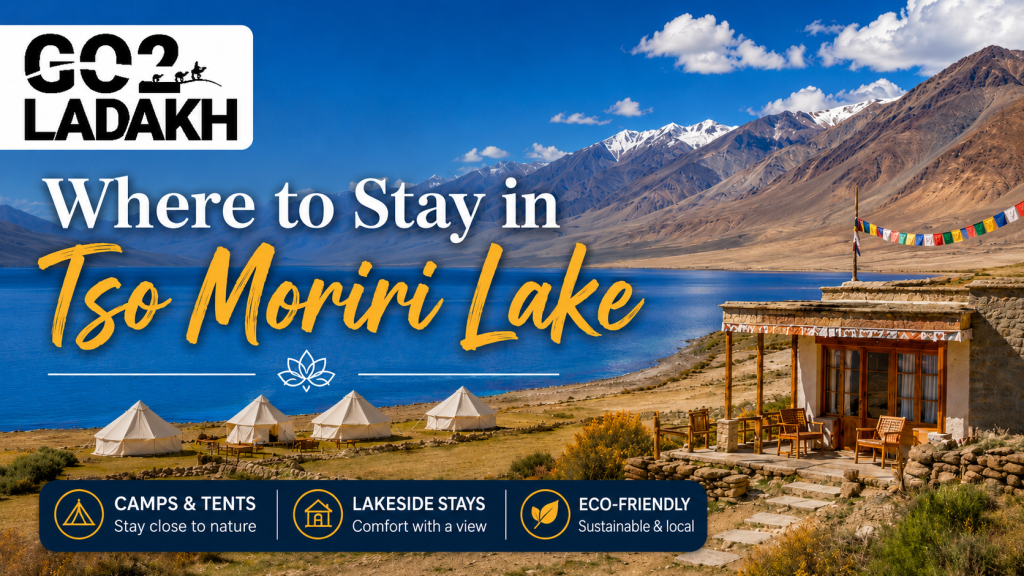
Where to Stay in Tso Moriri Lake: Complete Guide 2026
Where you stay at Tso Moriri matters in a way that is different from any other destination in Ladakh. This is not a question of choosing between a good and a better hotel. It is a question of understanding what kind of experience you want from one of the most remote overnight stops in India, and being honest with yourself about what you can comfortably handle at an altitude of 4,500+ metres with no mobile network, no ATM, and temperatures that plunge to 0°C or below every night, even in July.
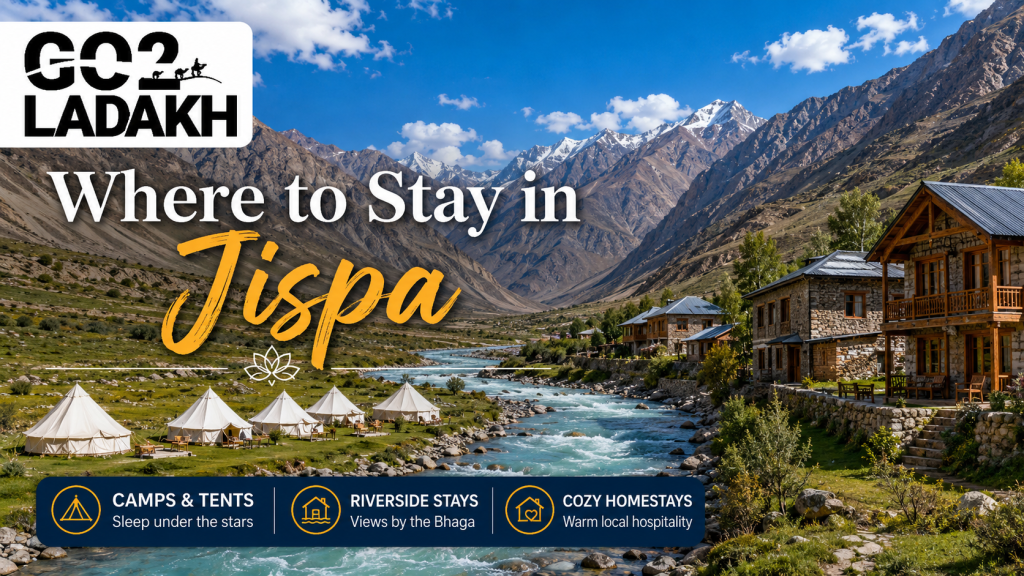
Where to Stay in Jispa: Best Hotels, Camps & Guide
Jispa is one of those places that most people pass through without really stopping — and later wish they had stayed longer. This quiet, compact village in the Lahaul Valley of Himachal Pradesh sits on the banks of the Bhaga River at 3,200 metres (10,500 feet), with snow-streaked peaks rising on every side and a silence so complete that you can hear the river from anywhere in the village.
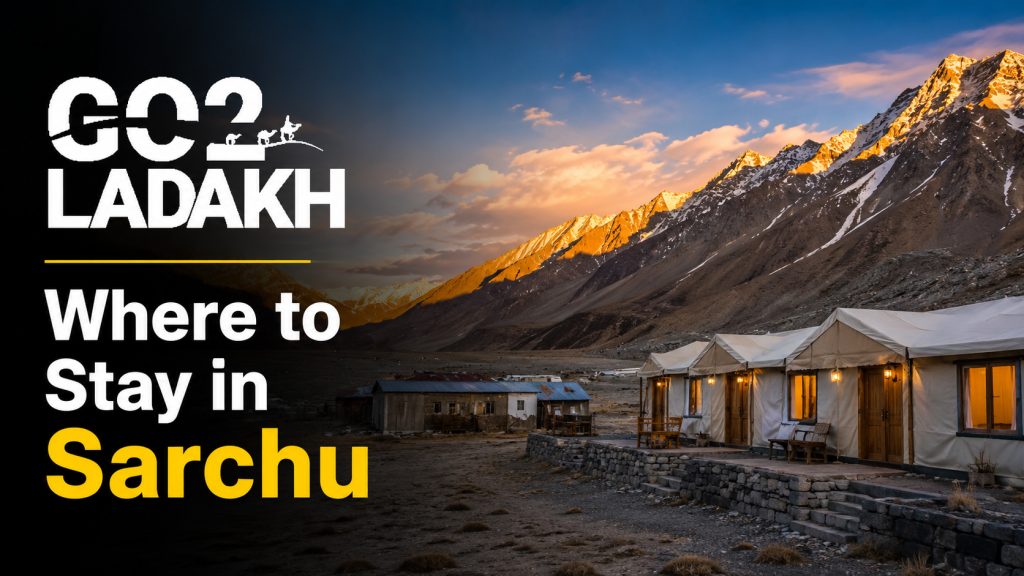
Where to Stay in Sarchu: Best Camps, Hotels & Complete Guide
Planning the complete Manali to Leh road trip? Go2Ladakh.in builds end-to-end Manali–Leh itineraries with curated overnight stops at Jispa or Sarchu, Leh hotel bookings, and real-time road status updates.
Adventure in Ladakh: Top 12 Sports & Activities Guide
Ladakh is not just a destination , it is an experience that pushes your limits, rewards your courage, and leaves you with memories that last a lifetime. Perched at an average altitude of 3,500 metres in the lap of the Himalayas and the Karakoram Range, adventure in Ladakh comes in every form imaginable , from roaring glacial rivers and ancient trekking trails to high-altitude cycling, traditional archery, and even bungee jumping over the Zanskar River.
Mountain Biking in Ladakh: Top Routes, Tips & Complete Guide 2026
Mountain biking in Ladakh is one of those experiences that sits in a category of its own , not just in India, but anywhere on earth.
You are pedalling through a high-altitude cold desert at 3,500 to 5,000 metres, with glaciated peaks on every horizon, ancient monasteries on cliff faces above you, and roads so quiet that the sound of your own tyres on gravel is the loudest thing for miles. The landscape is dramatic in a way that no photograph fully captures. The air is thin. The climbs are genuinely hard. The descents are the kind that make experienced riders stop to catch their breath and take it all in.