

Where You Stay in Leh Ladakh
The single most confusing part of planning a Ladakh trip, after sorting out permits and altitude medicine, is figuring out where to actually stay. Leh is not a large city, but it has distinct neighbourhoods that feel completely different from each other. Stay in the wrong area for your travel style and you will spend your acclimatisation days walking uphill in thin air when you should be resting. Stay in the right one and your base will quietly make everything easier.
Beyond Leh, the question gets more interesting. Pangong Lake, Nubra Valley, and Tso Moriri all have their own accommodation ecosystems, ranging from basic camps to genuinely comfortable lakeside retreats, and knowing what to expect at each changes how you plan your itinerary.
This guide explains every major area, neighbourhood by neighbourhood, destination by destination, so you can make the right call for your trip, your budget, and your travel style.
Why Where You Stay in Leh Matters More Than Usual
At sea level, picking a hotel 2 km from the town centre is a minor inconvenience. In Leh at 3,500 metres, it is something else.
Your first two days in Leh are acclimatisation days, your body is adjusting to air with roughly 35% less oxygen than you are used to. Walking uphill to your hotel carrying luggage, or trekking 20 minutes to find dinner on an empty stomach, genuinely affects how your body handles altitude. Staying somewhere flat, walkable to food and a pharmacy, with a guesthouse owner who understands altitude is the practical advantage of getting your Leh accommodation right.
The other factor: noise. Leh has a main market area that gets lively until late, and biker groups that arrive in convoy can be loud. A hotel one lane off Fort Road can feel like a different world from the one on it.
Leh City: Area by Area Breakdown
Changspa Road, Best Overall for Most Travellers
Who it’s for: First-timers, couples, families, anyone who wants quiet with convenience
Changspa is the neighbourhood that most experienced Ladakh travellers recommend, and for good reason. It sits just above the main market, roughly 10–15 minutes on foot downhill to Leh Bazaar, and has the best combination of views, quiet, and guesthouse quality in the city.
The area faces Shanti Stupa directl, many rooms and rooftop terraces have the stupa glowing against the sky at evening, with the Indus Valley spreading out below. Walking uphill from Changspa towards the stupa takes about 20 minutes and gives the best sunset view in all of Leh.
Changspa Road itself has a cluster of genuine Ladakhi family guesthouses, the kind where breakfast is homemade butter tea and tsampa porridge, the garden is a real kitchen garden, and the host will tell you tomorrow’s weather better than any app. These are not branded, not on every booking platform, and are among the most rewarding accommodation experiences in Ladakh.
Practical notes:
- Relatively flat terrain, easier for the first acclimatisation days
- Good restaurant strip along the road (Tibetan, Indian, café menus)
- 10–15 minute walk downhill to main market and taxi stand
- Walking back uphill with shopping bags requires more effort than expected, hire a shared auto for the return
- Price range: ₹800–₹6,000 per night depending on season and property
- Best for: Couples, solo travellers, photographers, first-timers
Fort Road & Main Market Area, Best for Convenience
Who it’s for: Bikers, short-stay travellers, those who want everything within 5 minutes
Fort Road is Leh’s most centrally located accommodation strip, within a short walk of the main bazaar, taxi stand, permit office, money changers, trekking gear shops, and most popular restaurants. If you are arriving late, leaving early, or doing a logistics-heavy trip, Fort Road puts everything within arm’s reach.
The trade-off is atmosphere. Fort Road hotels are more commercial, noisier at night, and less likely to give you the “Ladakhi guesthouse” feeling. Many are comfortable and functional, perfectly fine for what they are, but they are not the reason people remember their Ladakh accommodation fondly.
Practical notes:
- Closest area to taxi stands, market, and permit offices
- Noise levels higher, biker groups and market activity until late
- Widest range of budget options (₹600–₹3,000/night)
- Best area if you need to leave for Nubra or Pangong at 5 AM
- Best for: Bikers on tight timelines, solo budget travellers, groups managing logistics
Old Leh (Karzoo & Upper Fort Road Area), Best for Character
Who it’s for: Travellers who want genuine old-town Ladakhi character
The old town area of Leh, above the main market, towards the Leh Palace and Namgyal Tsemo Monastery, is where Leh’s historic character survives most intact. Narrow lanes of traditional stone-and-timber construction, the smell of juniper incense from household shrines, and a quietness that the main bazaar entirely lacks.
Guesthouses here tend to be older, family-run properties that have been accommodating travellers for decades. Rooms are more basic but the setting, looking out towards the palace and the valley, is genuinely distinctive.
Hotel Saser, Karzoo Lane: One of Leh’s longest-standing budget guesthouses, situated in Karzoo near Raj Niwas. Simple, garden-facing rooms, restaurant on-site, free WiFi, walking distance to Leh Palace. A no-frills option with character and an honest price. Good for budget travellers who want the old-town feel over modern comfort. Spacious rooms, clean bathrooms, a pleasant garden, and friendly staff who mostly keep to themselves, exactly what a well-run Ladakhi budget guesthouse should be.
Practical notes:
- More uphill walking than Changspa, steeper lane gradient
- Fewer restaurants immediately nearby
- Closest walking access to Leh Palace and Namgyal Tsemo Monastery
- Price range: ₹500–₹2,500/night
- Best for: Solo travellers, history enthusiasts, budget-conscious first-timers wanting authenticity
Upper Changspa & Skara, Best for Boutique Stays
Who it’s for: Couples, those wanting premium Leh experiences
The upper reaches of Changspa and the Skara area are where Leh’s better boutique properties sit, converted traditional homes with garden terraces, mountain-view rooms, and the kind of thoughtful hospitality that makes a Ladakh trip feel curated rather than just organised.
Properties here tend to have smaller room counts, more personalised service, and genuinely beautiful settings, exposed stone walls, traditional window frames, rooftop terraces with uninterrupted Zanskar Range views.
Practical notes:
- Slightly further from the market — 20–25 minutes walk to the bazaar
- Best panoramic views of the Stok Kangri range
- Most properties serve home-cooked Ladakhi breakfast
- Price range: ₹3,000–₹12,000/night
- Best for: Honeymooners, couples, photographers, anyone who wants something genuinely beautiful
Airport Area — Best for Late Arrivals or Early Departures
Who it’s for: Transit travellers, very short stays, self-drive groups
Hotels along the Leh–Srinagar highway near the airport are practical rather than memorable. Well-positioned for the airport (5–10 minutes by auto) and the highway, but not the right base for exploring Leh on foot.
Practical notes:
- Easy parking — good for self-drive travellers with vehicles or bikes
- 15–20 minute auto ride to Leh market
- Wider, flatter roads — easier for vehicles with equipment
- Price range: ₹1,500–₹5,000/night
- Best for: Bikers with heavy gear, self-drive groups, early-morning-flight travellers
Leh Accommodation at a Glance
| Area | Best For | Vibe | Price Range | Walk to Market |
|---|---|---|---|---|
| Changspa Road | First-timers, couples | Quiet, scenic, local | ₹800–₹6,000 | 10–15 min |
| Fort Road / Main Market | Bikers, logistics-heavy trips | Central, busy | ₹600–₹3,500 | 2–5 min |
| Old Leh / Karzoo | Budget travellers, character seekers | Historic, quiet | ₹500–₹2,500 | 10–12 min |
| Upper Changspa / Skara | Couples, boutique stays | Scenic, peaceful | ₹3,000–₹12,000 | 20–25 min |
| Airport area | Short stays, self-drive | Practical, flat | ₹1,500–₹5,000 | 20–25 min |
Beyond Leh: Where to Stay at the Key Destinations
Pangong Tso — The Most Important Accommodation Decision on the Entire Trip
Pangong is where most first-time Ladakh visitors make their biggest accommodation mistake: booking the cheapest tent they can find and discovering at 2 AM in near-freezing temperatures that the shared toilet is a 5-minute walk through the dark.
The Pangong lakeside accommodation market has grown enormously. There are now options ranging from basic to genuinely luxurious — and the difference between them is not just comfort but the entire quality of the experience.
What to know before booking Pangong accommodation:
Most camps and hotels are on the
- southern bank: (Spangmik to Man village) — closest to the Leh–Pangong highway but increasingly crowded and commercial
- Merak Village: on the eastern edge of the accessible lake is significantly quieter, surrounded by barley farmland, and offers a more authentic experience of the lake
- Electricity: solar power with generator backup until around 11 PM — this is universal across the lake, not a quality indicator
- Hot water: solar-heated, best in early afternoon
- Book at least 3–4 weeks ahead in peak season (June–August)
- Always ask specifically about attached bathrooms — many budget camps have shared facilities a walk from your tent
Featured Stay: Saser Scenic Pangong — Merak Village
If you are going to spend a night at Pangong Lake — and you should — the question is not whether to spend on it but where to direct that investment wisely.
Saser Scenic Pangong is the answer.
Situated in the peaceful Merak Village on the serene banks of Pangong Lake, Saser Scenic is not a camp — it is a proper lakeside resort, and currently one of the finest places to stay in all of Ladakh. In a landscape where “Pangong accommodation” often means a thin-walled tent with a shared composting toilet, Saser Scenic represents something genuinely different.
The property:
Saser Scenic has 12 premium concrete rooms, each facing the lake directly. Not rooms with a lake glimpse through a gap in the garden. Not tent flaps overlooking a path towards the water. Proper rooms with panoramic Pangong Lake views from the window, the lounge chair, and the private outdoor seating area just outside your door.
The rooms are the largest in the Merak area — a detail that matters more than it sounds when you have spent six hours in an SUV on Ladakh mountain roads and want somewhere that actually feels like a place to rest.
Each room includes:
- Master bedroom with quality bedding and room heating
- Spacious private bathroom with premium toiletries
- Cozy personal lounge area
- Coffee station
- Private outdoor seating and dining area facing the lake directly
The resort sits surrounded by working barley farmland — one of the few remaining genuinely agricultural settings along Pangong. The farmland between the rooms and the lake creates a landscape composition that no interior design budget can manufacture. You are not looking at a car park, a row of tents, or a service road. You are looking at wheat fields, the lake, and the Karakoram.
The Saser Scenic experience at Pangong:
Waking up at Pangong is the emotional centrepiece of the entire Ladakh trip. At Saser Scenic, the first light on the lake is visible from bed — the water turning from charcoal to deep blue to the lake’s famous shifting turquoise as the sun clears the eastern ridges. This is the moment most Pangong visitors are stumbling out of tents in the dark to find. At Saser Scenic, you watch it from under warm covers with a hot water flask on the bedside table.
The resort’s viewing deck — an elevated outdoor platform — is built specifically for the panoramic lake perspective. It is the right place at sunrise, at golden hour, and after the lights go out when the Milky Way appears above Pangong with a clarity that most travellers are not prepared for.
- Dining at Saser Scenic: A curated menu of Indian, Continental, and Chinese cuisine, served in a dining room with lake views. In a setting where the alternative is often a roadside dhaba serving dal chawal after a 6-hour drive, this is not a minor detail.
- Stargazing: After 11 PM when the area’s solar power switches off, Pangong’s skies become extraordinary. With no light pollution and the thin high-altitude air, the Milky Way is clearly visible to the naked eye on clear nights. Saser Scenic’s outdoor areas face away from any light sources — the stargazing experience here is, by almost any measure, among the finest accessible from any hotel in India.
Practical details:
- Location: Merak Village, Pangong Tso — approximately 170 km from Leh via Chang La
- Drive time from Leh: 5–6 hours (mountain roads — budget generously)
- Room type: Premium lake-view concrete rooms (12 rooms)
- Facilities: Heated rooms, private bathrooms, dining room, viewing deck, parking
- Electricity: Solar + generator until ~11 PM (standard for the area)
- Booking: go2ladakh.in / saserhotels.com — book at least 3–4 weeks ahead in season
Who Saser Scenic is best for:
- Couples wanting the most romantic Pangong night available anywhere
- Families who need real room space and private bathrooms at altitude
- Photographers wanting unobstructed lake-view shooting from pre-dawn to after dark
- Any traveller who has done the budget-camp Pangong experience and wants to do it properly
In the words of guests: “Amazing rooms, unbelievable food and extremely hospitable service staff. Right by the Pangong Lake in Merak Village.” “Good property, good food and amazing view of Pangong Tso lake.” “The best thing about this lodge is that it’s on the edge of Merak Village — you get a great wide-open view of Pangong Lake and mountains.”
Book Saser Scenic Pangong directly through go2ladakh.in → [Book Now]
- Nubra Valley — Where to Stay, Nubra Valley accommodation clusters in two main areas:
- Diskit/Hunder — the main tourist zone near the sand dunes, Bactrian camels and Diskit Monastery. Most families and first-timers stay here.
- Sumur/Panamik — further north, quieter, near the Panamik hot springs. Worth considering for a second Nubra night if your itinerary allows.
Property types:
- Budget guesthouses (₹1,000–₹2,500/night): Family-run, simple, meals usually included
- Fixed camps (₹2,500–₹6,000/night): Semi-permanent tented structures with attached facilities
- Boutique hotels (₹4,000–₹12,000/night): Proper rooms with mountain views and dining
Saser Resort & Wellness, Hundar (Nubra Valley): From the same Saser Hotels family, the Nubra property sits at 3,048 metres in Hundar village with panoramic views across the confluence of the Ladakh, Karakoram, and Saltoro mountain ranges. 10 premium rooms — each with bathtubs — and a wellness-oriented philosophy that makes it one of the finest stays in the valley. The organic garden, 24-hour hot water, and quality dining make it a strong choice for travellers who want to experience Nubra properly rather than just tick it off a checklist.
Tso Moriri & Korzok — Where to Stay
Korzok village near Tso Moriri has basic guesthouses and a handful of camps. Facilities are genuinely minimal, this is one of Ladakh’s most remote accessible destinations. Shared bathrooms are common at budget properties, electricity from generators, and cold water in most.
Manage expectations consciously. You go to Tso Moriri for the landscape, the silence, the flamingos, and the Changpa nomads, not the rooms. A sleeping bag liner and personal toiletries are essential.
Things to Check Before Booking Any Ladakh Accommodation
- Attached or shared bathroom: Always ask, especially at Pangong and Nubra camps. The difference at altitude in the cold matters enormously.
- Is heating available: Leh nights in May and September can be cold. Pangong nights are cold in any month. Always ask if the room has a heater or electric blanket.
- What hours is electricity available: Most remote Ladakh properties run on solar and generator, typically until 10–11 PM. Bring a power bank (minimum 20,000 mAh).
- Is hot water available, and when: Solar-heated water is best in early afternoon. Expect limited hot water in mornings and evenings unless the property has a boiler.
- Is there a phone signal: Changspa Road in Leh has reasonable Airtel/BSNL signal. At Pangong and Nubra, signal is minimal to non-existent at most properties. Download offline maps before you leave Leh.
- Carry cash: Pangong, Nubra and Tso Moriri accommodation is cash-only at most properties. ATMs in Leh run short in peak season. Withdraw ₹15,000–₹20,000 before leaving the city.
Conclusion
Getting your Ladakh accommodation right is not about spending more, it is about spending in the right places. Use Changspa Road as your Leh base. Rest completely on Day 1. Let your guesthouse owner be your local guide for Day 2’s gentle sightseeing and permit logistics. Then, when you make the drive to Pangong, book somewhere that lets the lake speak for itself.
If there is one upgrade that makes the single biggest difference to a Ladakh trip, it is the Pangong night. The difference between a warm, private, lake-facing room at Saser Scenic in Merak and a cold, crowded camp at Spangmik is not just the money, it is the entire experience of one of India’s most extraordinary landscapes. One version you endure. The other you savour.
Ready to book? Go2Ladakh.in offers hand-picked accommodation across Leh, Nubra and Pangong, including direct booking for Saser Scenic Pangong.
FAQs About Staying in Leh Ladakh
Q1. What is the best area to stay in Leh for first-time visitors?
Changspa Road, quiet, scenic, walkable to Shanti Stupa, and 10–15 minutes from the main market. The balance of convenience, calm and local atmosphere is unmatched in Leh.
Q2. How far in advance should I book hotels in Leh Ladakh?
Peak season (June–August): 4–6 weeks minimum. The best Changspa guesthouses and Pangong properties sell out well before the season. May and September need 2–3 weeks notice.
Q3. Is Saser Scenic Pangong worth the price?
For travellers who want the best Pangong experience, real lake-view rooms, private bathroom, quality meals, and warmth at altitude, yes, completely. The alternative (budget camp, shared toilet, thin walls) costs less in money but significantly more in experience.
Q4. Is it safe to stay in tented camps at Pangong?
Yes, camps are safe. The issue is comfort, not safety. Cold nights at 4,350 metres in a poorly insulated tent with shared facilities 100 metres away is a miserable experience that ruins what should be a trip highlight. Choose attached-bathroom, insulated camps or proper rooms.
Q5. What is the difference between Spangmik and Merak at Pangong?
Spangmik is the main tourist camp strip, closer to Leh, more crowded, more commercial, busy road nearby. Merak is on the quieter eastern edge, surrounded by farmland, significantly quieter, and home to Saser Scenic Pangong. Both face the same lake. Merak is 20–30 minutes further drive from Leh.
Q6. Are there luxury hotels in Leh?
Yes. The Grand Dragon Ladakh is the most established luxury property. The Zen Ladakh and various boutique properties in Skara and upper Changspa offer premium experiences. Peak season rates run ₹8,000–₹25,000+ per night.
Q7. Can I find budget guesthouses in Leh under ₹1,000 per night?
Yes, particularly in the Karzoo / old Leh area and parts of Fort Road. Basic but clean double rooms with attached bathroom start from ₹700–₹1,200 in shoulder season. Hotel Saser in Karzoo is a reliable long-standing option in this range.
Q8. Do Leh guesthouses include meals?
Most Changspa and old-town guesthouses include breakfast, typically butter tea, porridge, eggs and bread. Dinner is usually eaten at nearby restaurants rather than the guesthouse. Full board can be arranged in advance at most family-run properties.
Q9. What is the best area to stay in Leh?
For first-time visitors: Changspa Road, quiet, scenic, close to Shanti Stupa, and within easy walking distance of the main market.
- For those who want to be closest to the bazaar: Fort Road / Main Market area.
- For couples wanting something boutique: Upper Changspa or Skara area.
- For Pangong, skip the crowded southern bank camps and consider Merak Village, and specifically Saser Scenic Pangong, for something genuinely quiet and special.
Trending Blogs
Similar Blogs
7-Day Ladakh Itinerary for September: Leh, Nubra Valley & Pangong Lake
One full week is enough to get a good first look at Ladakh, as long as you don’t try to cover half the region in seven days. This Ladakh itinerary 7 days plan keeps things simple: two days around Leh, followed by Nubra Valley and Pangong Lake, before returning back to Leh.
10 Reasons September Is One of the Best Months to Visit Ladakh
If you have been waiting for the right time to visit Ladakh, September deserves a place on your list. Ladakh in September has a slightly different feel from the busy summer months. The skies are clearer, the evenings start getting cold, the roads feel more peaceful and the landscape slowly begins to change with the season.
Trekking in Ladakh: Top 13 Treks, Costs, Tips & Complete Guide 2026
Trekking in Ladakh is different from trekking anywhere else in India , and many experienced trekkers would say it is different from anywhere else in the world. The landscape here is not forest and mist. It is not lush green meadows punctuated by waterfalls. It is something rawer and more singular: high-altitude cold desert, glaciated peaks, ancient trade routes carved through impossible terrain, river gorges so deep the sun barely reaches the bottom, and monasteries perched on clifftops that have been watching trekkers pass for a thousand years.
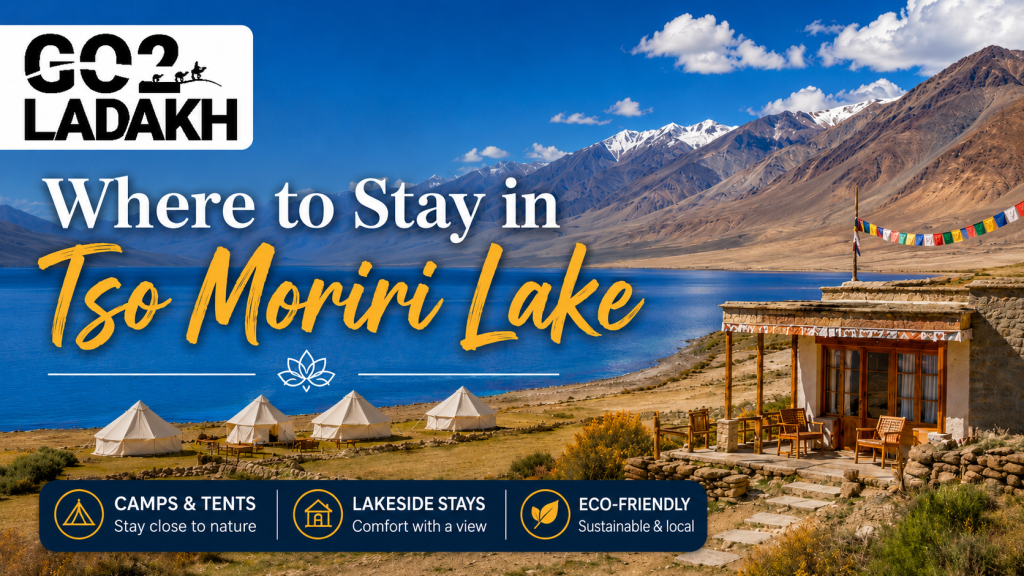
Where to Stay in Tso Moriri Lake: Complete Guide 2026
Where you stay at Tso Moriri matters in a way that is different from any other destination in Ladakh. This is not a question of choosing between a good and a better hotel. It is a question of understanding what kind of experience you want from one of the most remote overnight stops in India, and being honest with yourself about what you can comfortably handle at an altitude of 4,500+ metres with no mobile network, no ATM, and temperatures that plunge to 0°C or below every night, even in July.
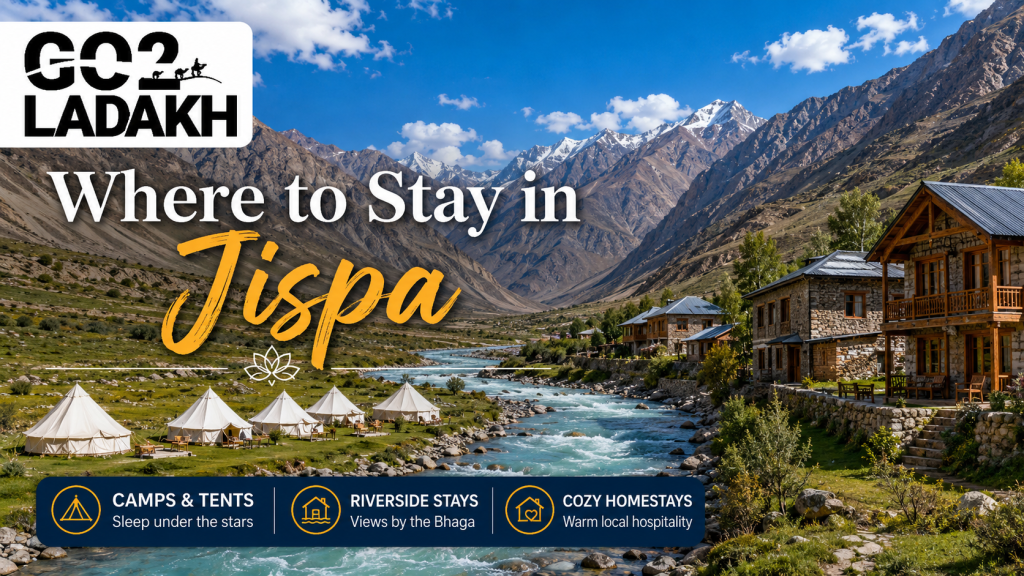
Where to Stay in Jispa: Best Hotels, Camps & Guide
Jispa is one of those places that most people pass through without really stopping — and later wish they had stayed longer. This quiet, compact village in the Lahaul Valley of Himachal Pradesh sits on the banks of the Bhaga River at 3,200 metres (10,500 feet), with snow-streaked peaks rising on every side and a silence so complete that you can hear the river from anywhere in the village.
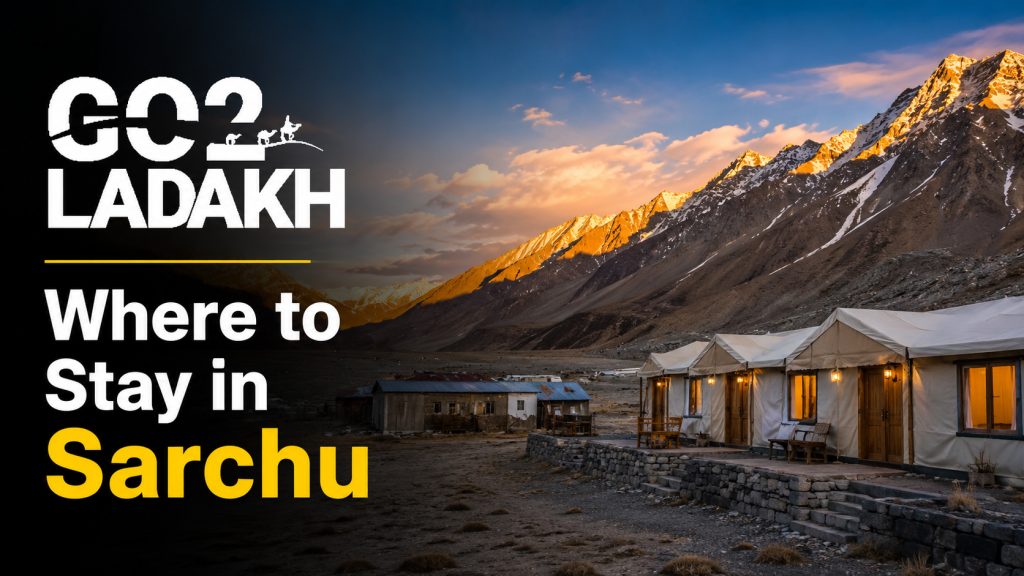
Where to Stay in Sarchu: Best Camps, Hotels & Complete Guide
Planning the complete Manali to Leh road trip? Go2Ladakh.in builds end-to-end Manali–Leh itineraries with curated overnight stops at Jispa or Sarchu, Leh hotel bookings, and real-time road status updates.
Adventure in Ladakh: Top 12 Sports & Activities Guide
Ladakh is not just a destination , it is an experience that pushes your limits, rewards your courage, and leaves you with memories that last a lifetime. Perched at an average altitude of 3,500 metres in the lap of the Himalayas and the Karakoram Range, adventure in Ladakh comes in every form imaginable , from roaring glacial rivers and ancient trekking trails to high-altitude cycling, traditional archery, and even bungee jumping over the Zanskar River.
Mountain Biking in Ladakh: Top Routes, Tips & Complete Guide 2026
Mountain biking in Ladakh is one of those experiences that sits in a category of its own , not just in India, but anywhere on earth.
You are pedalling through a high-altitude cold desert at 3,500 to 5,000 metres, with glaciated peaks on every horizon, ancient monasteries on cliff faces above you, and roads so quiet that the sound of your own tyres on gravel is the loudest thing for miles. The landscape is dramatic in a way that no photograph fully captures. The air is thin. The climbs are genuinely hard. The descents are the kind that make experienced riders stop to catch their breath and take it all in.