

Adventure in Ladakh: Top 12 Sports & Activities Guide
Ladakh is not just a destination , it is an experience that pushes your limits, rewards your courage, and leaves you with memories that last a lifetime. Perched at an average altitude of 3,500 metres in the lap of the Himalayas and the Karakoram Range, adventure in Ladakh comes in every form imaginable , from roaring glacial rivers and ancient trekking trails to high-altitude cycling, traditional archery, and even bungee jumping over the Zanskar River.
Whether you are a seasoned adrenaline junkie or someone stepping into adventure travel for the first time, Leh Ladakh adventure activities have something extraordinary to offer. The dramatic terrain , barren mountains, turquoise lakes, remote valleys, and vast cold deserts , acts as a natural playground that makes every sport here feel bigger, bolder, and more rewarding than anywhere else in India.
This guide covers the top 12 adventure sports in Leh Ladakh, with details on the best places, the ideal time to visit, and approximate costs, so you can plan your Ladakh adventure trip with complete confidence.
Key Takeaways
- Ladakh offers 12+ adventure sports ranging from beginner-friendly to expert-level challenges.
- The best time for most adventure activities in Leh Ladakh is between May and October.
- Acclimatise for at least 2 full days in Leh before attempting any physically demanding activity.
- Indian tourists must pay the Environment Fee (formerly known as the Inner Line Permit) to visit restricted areas like Nubra Valley and Pangong Lake , apply online at lahdclehpermit.in.
- Always book adventure activities through certified and registered local operators for safety.
Top 12 Adventure Sports in Ladakh at a Glance
| # | Activity | Best Season | Difficulty | Approx. Cost |
| 1 | River Rafting | June–October | Easy–Expert | ₹1,500–₹65,000 |
| 2 | Mountain Biking | June–September | Moderate–Hard | ₹1,500–₹3,000/day |
| 3 | Camel Safari | June–September | Easy | ₹300–₹600 |
| 4 | Trekking | June–September | Easy–Hard | ₹1,500–₹10,000+/day |
| 5 | Jeep Safari | May–October | Easy | ₹3,000–₹8,000/day |
| 6 | Polo | May–October | Moderate | Free (spectating) |
| 7 | Quad Biking | June–September | Easy–Moderate | ₹500–₹1,500 |
| 8 | Archery | May–October | Easy | ₹200–₹500 |
| 9 | Rock Climbing | May–September | Moderate–Hard | ₹1,500–₹4,500 |
| 10 | Ice Hockey | December–February | Moderate | Free–₹500 |
| 11 | Paragliding | June–September | Easy (tandem) | ₹1,500–₹3,000 |
| 12 | Bungee Jumping | April–July | Easy–Moderate | ₹4,000 |
- River Rafting in Ladakh
River rafting is the most iconic of all adventure activities in Leh Ladakh. The Indus and Zanskar rivers slice through breathtaking canyon landscapes, creating some of the most visually dramatic rafting routes in all of Asia. Whether you are a complete beginner or an advanced rafter seeking Class IV rapids, Ladakh has the perfect stretch for you.
The glacial waters are icy cold, the mountains tower on both sides, and the sheer scale of the landscape makes every stroke of the paddle feel monumental. It is not just a sport here , it is an experience that is genuinely unique to this part of the world.
Best Places for River Rafting in Ladakh
| Route | River | Grade | Distance | Suitable For |
| Kharu to Spituk | Indus | Grade I–II | ~30 km | Absolute beginners |
| Phey to Nimo | Indus | Grade II–III | ~25 km | Beginners–Intermediate |
| Chilling to Nimo | Zanskar | Grade III–IV | ~35 km | Intermediate–Advanced |
| Padum to Nimo | Zanskar | Grade IV–V | Multi-day | Expert rafters only |
Bonus tip: The Shyok River in Nubra Valley is an offbeat rafting option that very few visitors explore. It offers a quieter, scenic rafting experience with Grade II–III rapids.
Best Time for River Rafting
June to October is the ideal season. Rivers are fed by glacial melt from June onwards, making them swift and exciting. The Indus is best from June to August. The Zanskar becomes more accessible from June to September, when the roads to the river confluence open up.
Cost of River Rafting in Ladakh
- Indus River (Grade II): ₹1,500–₹1,800 per person for approximately 2 hours
- Zanskar River (Grade III–IV, day trip): ₹2,500–₹5,000 per person
- Multi-day Zanskar expedition: ₹25,000–₹65,000 per person (includes camping, meals, and transport)
- Mountain Biking in Ladakh
Mountain biking in Ladakh is one of the most physically demanding and visually rewarding adventure experiences in India. You pedal across high-altitude passes, follow ancient caravan routes, and ride past monasteries, river valleys, and villages that feel completely untouched by modern life.
The combination of thin air, challenging gradients, and dramatic scenery makes every ride feel like a genuine achievement. Many experienced cyclists put Ladakh on the same bucket list as the Tour de France routes , the scale and beauty here are truly comparable.
Best Places for Mountain Biking in Ladakh
- Khardung La Pass (5,359 m) , The crown jewel of Ladakh cycling. Widely regarded as one of the highest motorable roads in the world, the ride from Leh to Khardung La and back is an extreme challenge for experienced cyclists.
- Leh to Hemis , A more manageable 40-km day ride along the Indus Valley, passing through Thiksey and Hemis monasteries.
- Leh to Alchi , A 70-km route following the Indus River through dramatic terrain. Suitable for moderately fit cyclists.
- Pangong Tso Loop , A multi-day biking route that takes you to the famous blue lake via Chang La Pass.
- Nubra Valley Circuit , Ride from Leh over Khardung La to the sand dunes and back. A 2-day route for experienced riders.
Best Time for Mountain Biking
June to September is the best window. July and August offer the most stable road conditions. For experienced riders, extending into early October is possible, but temperatures drop sharply after sunset.
Cost of Mountain Biking in Ladakh
- Bicycle rental in Leh: ₹600–₹1,500 per day (basic mountain bike)
- Premium bikes suitable for high passes: ₹1,500–₹3,000 per day
- Guided multi-day cycling tour (10 days): ₹25,000–₹40,000 per person
- Camel Safari in Nubra Valley
Most people do not associate Ladakh with camels , but Nubra Valley surprises every visitor. Tucked between the Shyok River and the Karakoram Range lies a stretch of actual sand dunes at Hunder village. Here, you can ride Bactrian camels , the magnificent double-humped variety, native to Central Asia , across the dunes with snow-capped peaks forming an almost surreal backdrop.
This is one of the more relaxed and family-friendly adventure activities in Leh, but the setting makes it feel wonderfully extraordinary. It is one of those rare experiences where the landscape makes even a gentle activity feel completely unlike anything else you have done.
Best Places for Camel Safari
- Hunder Sand Dunes, Nubra Valley , The primary and most popular location. The dunes sit at approximately 3,000 metres altitude near the Shyok River.
- Diskit Village , Camel rides are also available here, combined with a visit to the famous Diskit Monastery.
Best Time for Camel Safari
June to September is ideal. The weather is pleasant, the sand dunes are accessible, and the Nubra Valley road via Khardung La is fully open. October is possible but cold nights begin to affect the experience.
Cost of Camel Safari in Ladakh
- Camel ride: ₹300–₹600 per person for approximately 30–45 minutes
- Note: You will need the Environment Fee (EDF) to access Nubra Valley. Apply in advance at lahdclehpermit.in.
- Trekking in Ladakh
Trekking is the soul of adventure in Ladakh. Nowhere else in India offers this combination of remote Himalayan trails, ancient Buddhist monasteries, high-altitude wildlife, and traditional village culture , all experienced on foot, at your own pace.
Unlike many popular trekking destinations in India, Ladakh trails feel genuinely wild. Mobile networks disappear within a few kilometres of Leh. Villages are hours apart. The sky overhead at night is filled with stars that are simply invisible from any city. Every trek here is a story worth telling.
Top Trekking Routes in Ladakh
Sham Valley Trek (Lamayuru to Alchi) , Beginner Often called the “Baby Trek,” this 4–5 day route is the most accessible in Ladakh. It passes through ancient monasteries, traditional villages, and dramatic canyon landscapes. Maximum altitude is around 4,100 metres. Ideal for first-time high-altitude trekkers.
Markha Valley Trek , Moderate This 7–8 day trek through Hemis National Park is the most popular full trekking experience in Ladakh. You pass through the Ganda La pass (4,900 m), ancient villages like Markha and Hankar, and have a chance of spotting snow leopards and blue sheep. The trail combines natural beauty with authentic Ladakhi culture.
Stok Kangri Base Camp Trek , Hard For ambitious trekkers, the route to the base camp of Stok Kangri (6,153 m) is a formidable challenge. The base camp sits at around 5,000 metres and offers staggering views of the Stok Range and the Indus Valley below.
Nubra Valley to Pangong Tso , Advanced A multi-day crossing through remote passes connecting two of Ladakh’s most iconic landscapes. For experienced trekkers only, with full guide and support team recommended.
Best Time for Trekking
June to September for all main routes. Winter trekking (January–February) is possible only for the Chadar Trek on the frozen Zanskar River , which requires specialist preparation and is subject to weather-based cancellations by the administration.
Cost of Trekking in Ladakh
- Budget (self-guided, homestay): ₹1,500–₹2,500 per day
- Guided trek (guide + ponies + camping): ₹5,000–₹10,000 per day per person
- Organised group trek (Markha Valley, 7 days): ₹15,000–₹25,000 per person
- Jeep Safari in Ladakh
A jeep safari is arguably the best way to explore Ladakh’s most remote and scenic corners in comfort. The region’s geography means that many of its most extraordinary places , remote valleys, high border passes, ancient monasteries , are accessible only by road, and a sturdy 4×4 jeep is the vehicle of choice.
Jeep safaris in Ladakh blend adventure with sightseeing seamlessly. You can cover enormous distances, cross multiple high passes in a single day, and access places that would take a week to reach on foot. For travellers who want the full flavour of the Leh Ladakh adventure without the physical demands of trekking, a jeep safari is the perfect solution.
Best Places for Jeep Safari in Ladakh
- Nubra Valley via Khardung La , The classic 2-day route over the world-famous Khardung La Pass to the cold desert of Nubra.
- Pangong Lake via Chang La , A stunning drive to the famous blue lake through Chang La Pass (5,360 m).
- Tso Moriri Lake , A more remote and less crowded destination in the Changthang Plateau, home to the rare black-necked crane.
- Zanskar Valley , One of the most isolated valleys in India, accessible only by jeep through dramatic gorges and passes.
- Hanle Dark Sky Reserve , An emerging destination for stargazing and wildlife, near the India-China border.
Best Time for Jeep Safari
May to October is the primary season. The Manali–Leh Highway typically opens in mid-May, and the Srinagar–Leh Highway is usually accessible from early April. Both roads close by November due to snowfall.
Cost of Jeep Safari in Ladakh
- Local sightseeing (Leh to Pangong and back, 2 days): ₹6,000–₹9,000 per jeep (seats 4–5 people)
- Nubra Valley 2-day jeep safari: ₹5,000–₹8,000 per jeep
- Full circuit jeep safari (7–10 days, Leh to Nubra–Pangong–Tso Moriri): ₹20,000–₹35,000 per jeep
- Polo in Ladakh
Polo in Ladakh is not the polished, aristocratic sport you see on television. It is raw, fast, and played with a community spirit that makes watching , or trying , it one of the most culturally immersive adventure activities in Leh.
The game is played on sturdy Zanskari ponies, tough mountain horses bred for high-altitude life. Teams of six players race across dusty polo grounds, swinging their mallets and chasing a wooden ball with genuine ferocity. The crowd cheers, folk musicians play, and the whole event feels like a window into a centuries-old tradition.
Polo has been part of Ladakhi culture for hundreds of years, far predating its association with British aristocracy. Watching or participating in a polo match here is an authentic cultural experience as much as it is a sporting one.
Best Places to Watch or Try Polo in Ladakh
- Polo Ground, Leh (near the DC Office) , The main venue for organised polo matches in Leh city.
- Shagaran and Chushot Gongma , Popular village venues during the annual Ladakh Polo Festival.
- Kargil District , Polo is also popular in villages across the Kargil region during summer festivals.
The Ladakh Polo Festival is typically held in the summer months (July–September) and is one of the highlights of the annual Ladakh Festival calendar, organised by the Ladakh Tourism Department.
Best Time for Polo in Ladakh
May to October, with the most exciting matches during the Ladakh Festival and the Ladakh Polo Festival, which usually fall in July–September.
Cost
Spectating polo matches is generally free during village festivals. Organised festival events may have a nominal entry charge. For tourists who want to try riding a Zanskari pony under coaching, costs vary by operator , typically ₹500–₹1,500 for a short session.
- Quad Biking in Ladakh
Quad biking is one of the most popular adventure activities for visitors who want speed and excitement without needing specialised skills or fitness levels. You climb onto an all-terrain four-wheeled vehicle and blast across sandy trails, rocky paths, and open desert terrain , it is immediately exhilarating and requires very little prior experience.
In Ladakh, the Nubra Valley’s sand dunes and the areas around Leh provide the perfect terrain for quad biking , a mix of open flat stretches, soft sand, and rocky trails that keep the experience varied and exciting.
Best Places for Quad Biking in Ladakh
- Hunder Sand Dunes, Nubra Valley , The most popular quad biking location. The combination of sand dunes, open desert, and mountain backdrops makes this the most photogenic option too.
- Leh outskirts , Several operators near Leh city offer quad biking sessions on rocky off-road terrain, ideal for a quick activity during a short city stay.
- Around Pangong Tso , Some operators in the lake area offer quad bikes for exploring the surrounding flat terrain along the shore.
Best Time for Quad Biking
June to September is the best window, when the Nubra Valley is fully accessible and the weather is pleasant.
Cost of Quad Biking in Ladakh
- Short ride (15–20 minutes): ₹500–₹800 per person
- Extended ride (30–45 minutes): ₹1,000–₹1,500 per person
- Full-hour private session: ₹1,500–₹2,500 per person
- Archery in Ladakh
Archery , called Dartses in Ladakhi , is one of the oldest and most culturally significant sports in Ladakh. It is far more than a simple activity for tourists. In Ladakh, archery contests are full community events, accompanied by folk music, local beer (chang), singing, dancing, and animated betting on the results.
Every village has its archery ground. Every summer brings multiple tournaments. And every competition is a genuine celebration of Ladakhi identity. For tourists, trying archery here is a way to genuinely connect with the local culture rather than just observe it.
The National Archery Stadium in Leh (also known as the Nawang Dorjey Stobdan Memorial Park Archery Stadium) is the central venue for professional and tournament-level archery in Ladakh.
Best Places for Archery in Ladakh
- National Archery Stadium, Leh , Organised sessions and professional competitions throughout the summer season.
- Village festivals across Ladakh , The most authentic archery experience, where you compete alongside locals during the Skyanos and Gogsum festivals.
- Hemis Festival and Ladakh Festival , Major annual events where archery competitions run alongside cultural performances and polo matches.
Best Time for Archery in Ladakh
May to October, with the richest experiences available during summer festivals in July and August.
Cost of Archery in Ladakh
- Try-archery session at the National Stadium: ₹200–₹500 per person
- Festival archery competitions: Often free to participate in alongside locals
- Rock Climbing in Ladakh
Rock climbing in Ladakh takes one of the world’s most popular adventure sports and places it in one of the most spectacular settings imaginable. The rocky cliffs, canyon walls, and mountain faces around Leh offer a wide range of climbing challenges , from beginner bouldering routes to serious multi-pitch climbs on 200-metre walls.
For climbers who have previously experienced indoor or beginner routes in cities, Ladakh represents a significant step up , both in challenge and in sheer visual grandeur. Climbing a cliff face with snow-capped peaks in every direction and a glacial river flowing below is a level of experience that no indoor climbing wall can replicate.
Best Places for Rock Climbing in Ladakh
- Nubra Valley , Some of the best natural rock formations in Ladakh, with routes suitable for both beginners and experienced climbers.
- Zanskar Valley , Remote and dramatic climbing terrain for experienced mountaineers.
- Stok, Matho, Kantak, and Gulap peaks , Recommended for professional and advanced climbers.
- Near Leh city , Several beginner-friendly bouldering and sport climbing routes are accessible from Leh, ideal for acclimatisation climbs.
Best Time for Rock Climbing
May to September is the primary season. The rock faces are dry and accessible. Avoid July–August if you prefer cooler conditions, as daytime temperatures at lower altitudes can reach 30°C.
Cost of Rock Climbing in Ladakh
- Beginner guided session (half day, including gear): ₹1,500–₹2,500 per person
- Intermediate multi-pitch climb with guide: ₹3,000–₹4,500 per person
- Advanced peak climbing expedition: ₹15,000–₹40,000 per person
- Ice Hockey in Ladakh
Ice hockey is one of the most surprising entries on any adventure sports list for India , yet Ladakh has a genuine, passionate ice hockey culture that produces national-level players and hosts tournaments each winter. The sport is deeply embedded in the region’s identity, and watching or playing on an outdoor ice rink surrounded by barren Himalayan mountains is a remarkable winter experience.
The city of Leh has a dedicated ice-skating rink that is used for both ice skating and ice hockey during winter. Natural frozen ponds and lakes in Ladakh’s villages also become informal hockey rinks once temperatures drop sufficiently.
The Ladakh Scouts Youth Ice Hockey Foundation has done tremendous work developing ice hockey talent in the region, and Ladakh has produced players who compete at national level.
Best Places for Ice Hockey in Ladakh
- Leh Ice Skating Rink , The main organised venue in Ladakh for ice skating and ice hockey.
- Shargole, Chiktan, Nimmo, Mulbekh, Dras , Villages where locals play informal ice hockey on natural frozen ponds and lakes.
- Kargil District , Active ice hockey communities during the winter months.
Best Time for Ice Hockey in Ladakh
December to February, when temperatures drop sufficiently for natural ice to form and the Leh rink operates at full capacity.
Cost
- Ice skating rink entry in Leh: Free–₹500 depending on the facility and season
- Ice hockey matches are community events , watching is generally free
- Paragliding in Ladakh
Paragliding offers something that no other activity in Ladakh can , complete silence, a bird’s-eye perspective, and the extraordinary sight of Ladakh’s barren mountains, turquoise rivers, and white monasteries spread beneath your feet as you soar on warm air currents.
For tandem paragliding (flying with a certified pilot), no prior experience whatsoever is required. You are harnessed to an experienced instructor who handles all the technical aspects of the flight while you focus entirely on taking in the experience and the view. It is accessible, safe, and genuinely breathtaking.
Best Places for Paragliding in Ladakh
- Leh Valley , The most popular paragliding zone. Launch sites above the city offer sweeping views of the Stok Range, the Indus Valley, and Leh Palace below. Most tour operators in Leh run regular tandem flights from here.
- Nubra Valley , A less common but spectacular paragliding location. Flying over the cold desert dunes with the Karakoram Range in the background is an exceptional experience.
- Zanskar Valley , Paragliding for more experienced flyers in an incredibly remote and dramatic setting.
Best Time for Paragliding in Ladakh
June to September is the ideal window. Clear skies, stable thermals, and warm daytime temperatures make conditions excellent. Avoid flying immediately after heavy rain, which can destabilise air currents at high altitude.
Cost of Paragliding in Ladakh
- Tandem paragliding (15–20 minutes): ₹1,500–₹3,000 per person
- Extended tandem flight with aerial photography: ₹2,500–₹4,000 per person
- Safety reminder: Always verify that your operator holds a valid DGCA (Directorate General of Civil Aviation) licence. Do not fly with unlicensed operators, regardless of the price offered.
- Bungee Jumping in Ladakh
Bungee jumping is the newest addition to Ladakh’s adventure sports scene , and it has already made a significant impact. Located near Tsogsti Village on the Zanskar River, approximately 35 km from Leh, this is considered one of the highest bungee jumping locations in India, positioned at an altitude of around 12,000 feet above sea level.
The jump is from a 90-degree cliff, with a freefall height of approximately 190 feet (about 58 metres). As you step off the platform, the Zanskar River lies far below and the Trans-Himalayan landscape surrounds you in every direction. It is simultaneously terrifying and utterly spectacular.
The site was founded by Sonam Wangyal, a certified bungee jumping professional from Ladakh, with the goal of expanding adventure tourism in the region beyond the traditional activities of rafting and trekking.
Best Places for Bungee Jumping in Ladakh
- Tsogsti Village, Zanskar River , The primary bungee jumping location, approximately 35 km from Leh on the road towards Chilling. Located 5 km from the Sangam (confluence of the Zanskar and Indus rivers).
- Gravity Adventure Zone, near Leh , A second option, closer to Leh city, with a jump height of approximately 150 feet (46 metres).
Best Time for Bungee Jumping in Ladakh
April to July is the recommended season, when weather conditions at the site are most stable and pleasant.
Cost of Bungee Jumping in Ladakh
- Bungee jump: approximately ₹4,000 per person (inclusive of safety gear and supervision)
- Vertical zipline (available at the same site): approximately ₹3,000 per person
Important Requirements
- Minimum age: 18 years
- Minimum weight: 40 kg
- Maximum weight: 110 kg
- People with certain health conditions (heart conditions, high blood pressure, epilepsy, back/neck injuries, pregnancy, osteoporosis) should not participate
- Duration of the full experience: approximately 3.5–4 minutes
Essential Safety Tips for Adventure in Ladakh
Before you begin any adventure activity in Leh Ladakh, keep these non-negotiable safety principles in mind.
- Acclimatise First , Always: Ladakh’s altitude is serious. Spend at least 2 full days resting in Leh before attempting any physically demanding activity. Symptoms of Acute Mountain Sickness (AMS) include headache, nausea, dizziness, fatigue, and disturbed sleep. If symptoms appear, rest and descend , do not push through them.
- Book Through Certified Operators: Only use operators registered with Ladakh Tourism, the Adventure Tour Operators Association of India (ATOAI), or DGCA (for paragliding). These certifications ensure safety equipment standards are met.
- Get Your Permits Sorted: For adventure activities in restricted areas (Nubra Valley, Pangong, Tso Moriri, Hanle), you need the Environment Fee. Apply online before your trip at lahdclehpermit.in.
- Start Activities Early in the Day: Ladakh weather changes fast. Afternoons can bring sudden storms, high winds, or rapid temperature drops. Plan all outdoor activities to finish before 2 PM.
- Stay Hydrated: At high altitude, dehydration accelerates AMS risk significantly. Aim for 3–4 litres of water daily, even when you do not feel particularly thirsty.
- Get Adequate Travel Insurance: Standard travel insurance may not cover activities above 4,000 metres or adventure sports. Verify your policy explicitly and get high-altitude adventure cover if needed before travelling.
Frequently Asked Questions (FAQs)
Q1. Which is the best adventure sport to try for first-timers in Ladakh?
For first-time adventure travellers, the best options are tandem paragliding (no experience needed, 15–20 minutes, ₹1,500–₹3,000), Indus River rafting on the Kharu–Spituk or Phey–Nimo stretch (Grade I–III, beginner-friendly), and the Sham Valley Trek (4–5 days, manageable altitude and terrain). All three are safe, exciting, and suitable for people with no prior experience , provided you have completed proper acclimatisation in Leh first.
Q2. What is the best time to visit Ladakh for adventure sports?
June to September is the best overall window for adventure activities in Leh Ladakh. All roads are open, the full range of activities is available, and the weather is most stable. May and early June offer pleasant conditions with fewer crowds. For winter-specific activities like ice hockey and the Chadar Trek (subject to conditions), December to February is the season, though Ladakh is accessible only by air in winter.
Q3. Do I need a permit for adventure sports in Ladakh?
Permits depend on where your activity takes place. No permit is needed for activities within Leh city itself. However, if your adventure , whether trekking, biking, jeep safari, or camel safari , takes you to areas like Nubra Valley, Pangong Lake, Tso Moriri, or Hanle, Indian nationals must pay the Environment Fee (formerly the Inner Line Permit). Apply online at lahdclehpermit.in before your trip. Foreign nationals require a Protected Area Permit (PAP) from the DC Office in Leh.
Q4. Is Ladakh adventure travel suitable for families with children?
Yes, with the right selection of activities. Camel safari in Nubra Valley, jeep safari, spectating polo matches, and gentle archery sessions are all family-friendly. River rafting on beginner Grade I–II stretches of the Indus is suitable for children above a certain age and weight (check with your operator). Bungee jumping has a minimum age of 18 years. The most important point for families is acclimatisation , children can be affected by altitude as quickly as adults, so allow sufficient rest days in Leh before exploring.
Q5. How much does a Ladakh adventure trip cost in total?
A basic 7-day Ladakh adventure trip including accommodation, meals, permits, transport, and 2–3 adventure activities typically costs:
- Budget traveller: ₹15,000–₹25,000 per person
- Mid-range traveller: ₹30,000–₹50,000 per person
- Comfortable/guided package: ₹60,000–₹1,00,000+ per person
Costs vary significantly based on your choice of activities, accommodation standard, and whether you travel independently or on a guided package. Booking adventure activities locally in Leh , rather than through large online platforms , generally saves 20–30%.
Trending Blogs
Similar Blogs
7-Day Ladakh Itinerary for September: Leh, Nubra Valley & Pangong Lake
One full week is enough to get a good first look at Ladakh, as long as you don’t try to cover half the region in seven days. This Ladakh itinerary 7 days plan keeps things simple: two days around Leh, followed by Nubra Valley and Pangong Lake, before returning back to Leh.
10 Reasons September Is One of the Best Months to Visit Ladakh
If you have been waiting for the right time to visit Ladakh, September deserves a place on your list. Ladakh in September has a slightly different feel from the busy summer months. The skies are clearer, the evenings start getting cold, the roads feel more peaceful and the landscape slowly begins to change with the season.
Where You Stay in Leh Ladakh
The single most confusing part of planning a Ladakh trip, after sorting out permits and altitude medicine, is figuring out where to actually stay. Leh is not a large city, but it has distinct neighbourhoods that feel completely different from each other. Stay in the wrong area for your travel style and you will spend your acclimatisation days walking uphill in thin air when you should be resting. Stay in the right one and your base will quietly make everything easier.
Trekking in Ladakh: Top 13 Treks, Costs, Tips & Complete Guide 2026
Trekking in Ladakh is different from trekking anywhere else in India , and many experienced trekkers would say it is different from anywhere else in the world. The landscape here is not forest and mist. It is not lush green meadows punctuated by waterfalls. It is something rawer and more singular: high-altitude cold desert, glaciated peaks, ancient trade routes carved through impossible terrain, river gorges so deep the sun barely reaches the bottom, and monasteries perched on clifftops that have been watching trekkers pass for a thousand years.
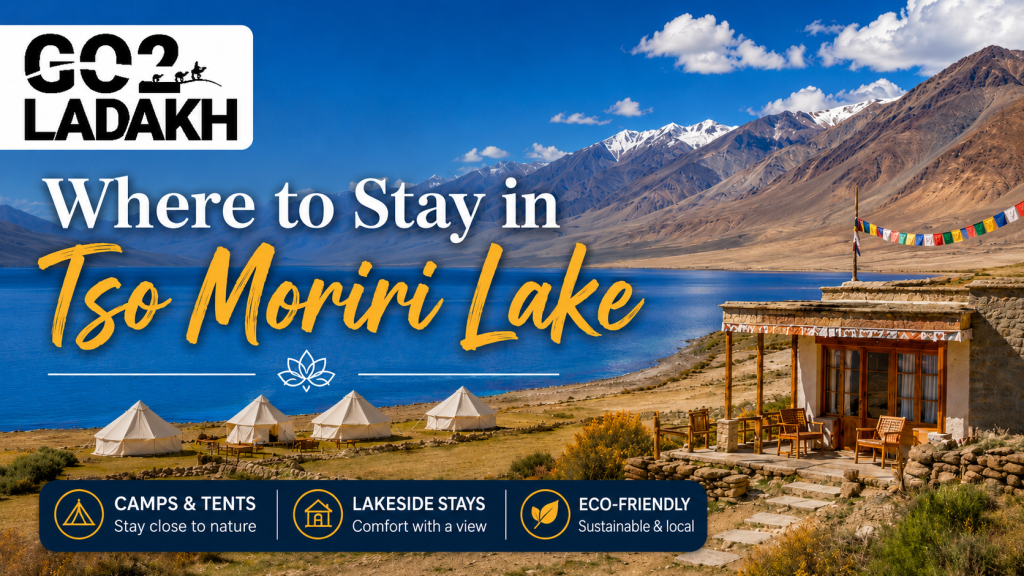
Where to Stay in Tso Moriri Lake: Complete Guide 2026
Where you stay at Tso Moriri matters in a way that is different from any other destination in Ladakh. This is not a question of choosing between a good and a better hotel. It is a question of understanding what kind of experience you want from one of the most remote overnight stops in India, and being honest with yourself about what you can comfortably handle at an altitude of 4,500+ metres with no mobile network, no ATM, and temperatures that plunge to 0°C or below every night, even in July.
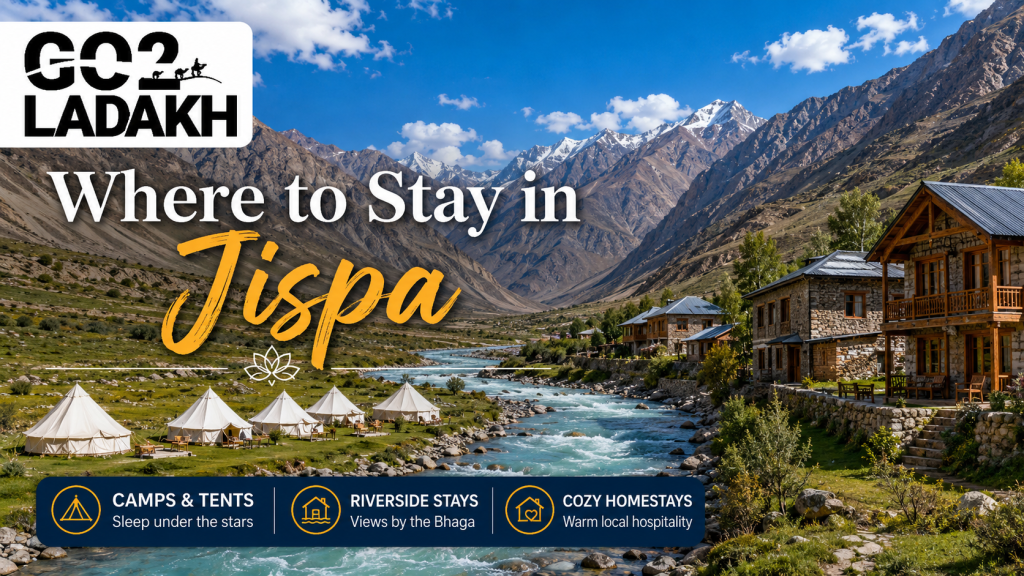
Where to Stay in Jispa: Best Hotels, Camps & Guide
Jispa is one of those places that most people pass through without really stopping — and later wish they had stayed longer. This quiet, compact village in the Lahaul Valley of Himachal Pradesh sits on the banks of the Bhaga River at 3,200 metres (10,500 feet), with snow-streaked peaks rising on every side and a silence so complete that you can hear the river from anywhere in the village.
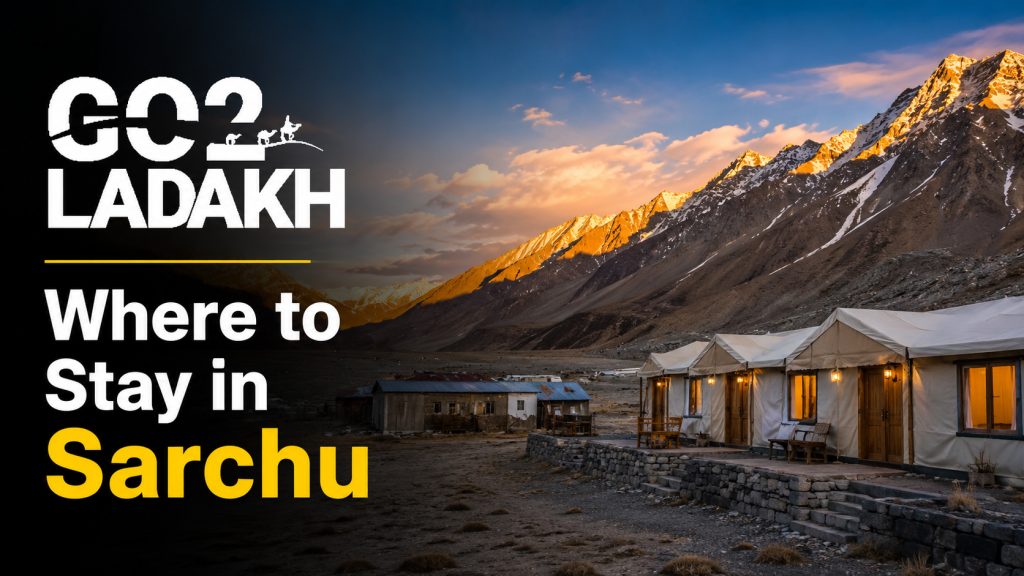
Where to Stay in Sarchu: Best Camps, Hotels & Complete Guide
Planning the complete Manali to Leh road trip? Go2Ladakh.in builds end-to-end Manali–Leh itineraries with curated overnight stops at Jispa or Sarchu, Leh hotel bookings, and real-time road status updates.
Mountain Biking in Ladakh: Top Routes, Tips & Complete Guide 2026
Mountain biking in Ladakh is one of those experiences that sits in a category of its own , not just in India, but anywhere on earth.
You are pedalling through a high-altitude cold desert at 3,500 to 5,000 metres, with glaciated peaks on every horizon, ancient monasteries on cliff faces above you, and roads so quiet that the sound of your own tyres on gravel is the loudest thing for miles. The landscape is dramatic in a way that no photograph fully captures. The air is thin. The climbs are genuinely hard. The descents are the kind that make experienced riders stop to catch their breath and take it all in.